
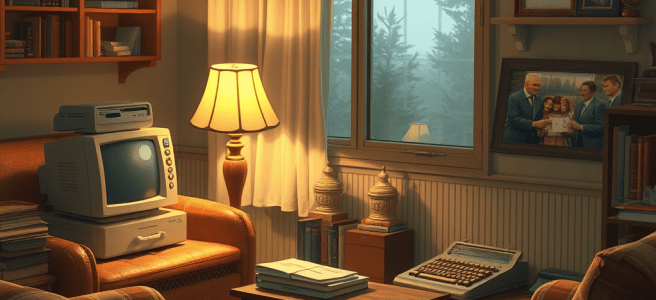
What does it really mean to go back to the old days? What are the old days and how do you define them?
To me, the old days is life before all the social media and other technologies that are supposed to make our life simpler and easier, but really just complicate things and cause anxiety
Who knows what’s next, because before there was TikTok, there was Instagram, and before Instagram, there was Facebook, and before Facebook, there was MySpace. Before that, all we had were blogs. Then that deviated to Twitter. Twitter was supposed to be microblogging because people didn’t have the attention span to read an entire post. They just wanted to read a few sentences and look at a pretty picture.
Let’s go back to blogs, delete all of your other social media, it’s time.

1. Telegraph (1830s–1840s)
- Invented by Samuel Morse.
- Used Morse code to send messages over long distances via wires.
- Revolutionized long-distance communication.
2. Telephone (1876)
- Invented by Alexander Graham Bell.
- Allowed real-time voice communication.
- Quickly became a staple in homes and businesses.
3. Radio & Broadcast Media (1890s–1920s)
- Wireless communication began with radio.
- Became a mass communication tool with news, music, and entertainment.
4. Television (1930s–1950s)
- Added visuals to broadcast media.
- Transformed communication into a visual storytelling platform.
5. Email & Early Internet (1960s–1980s)
- ARPANET led to the birth of email and early internet.
- Email became a fast and efficient alternative to postal mail.
6. Mobile Phones & SMS (1980s–1990s)
- Made communication portable.
- Text messaging (SMS) introduced concise, fast communication.
7. Internet Boom & Instant Messaging (1990s–2000s)
- Services like AOL, MSN Messenger, and ICQ enabled real-time chatting.
- The web allowed people to share information instantly worldwide.
8. Social Media (2000s–Present)
- Platforms like MySpace, Facebook, Twitter, Instagram, and TikTok.
- Transformed communication into a constant, global, multimedia experience.
- Emphasized user-generated content, connectivity, and community building.

 Daily Irritant
You must be logged in to post a comment.