
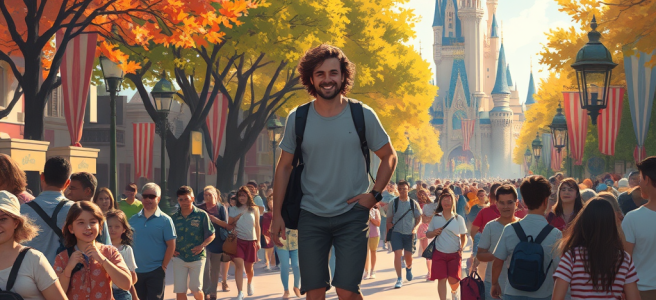
If you’ve ever felt like you’re playing an endless game of human Frogger at Disney World, constantly weaving and dodging to avoid bumping into other guests, you’re not alone. As someone with a larger phsyical presence, I’ve noticed that I seem to be doing most of the “defensive walking” at theme parks – and it’s exhausting.
The constant mental load of spatial awareness, the anxiety of potentially knocking someone over, and the feeling that you’re the only one paying attention to personal space can turn what should be a magical day into a stressful navigation challenge. But here’s what I’ve learned: it doesn’t have to be this way.
The Reality of Crowd Awareness

First, let’s address the elephant in the room (pun intended). Research suggests that only about 20-30% of people maintain high situational awareness in crowded environments. Most guests at theme parks are absorbed in their excitement, conversations, smartphones, or simply the sensory overload of the experience. This means if you’re constantly aware of your surroundings and actively avoiding collisions, you’re actually in the minority – and that’s not a bad thing.
Your spatial awareness isn’t a burden; it’s a skill. But like any skill, it can become overwhelming when you feel like you’re the only one using it.
Strategies That Actually Work
Timing Is Everything

The single biggest game-changer for reducing crowd anxiety is strategic timing. Early park admission (if you’re staying on Disney property) offers a golden hour of lighter crowds. Weekdays during school sessions and avoiding major holidays can transform your experience from sardine can navigation to comfortable walking.
Use Disney’s mobile app to check real-time crowd levels at different areas of the park. Sometimes, a five-minute walk to a less popular section can give you the breathing room you need.
Walk Like You Belong
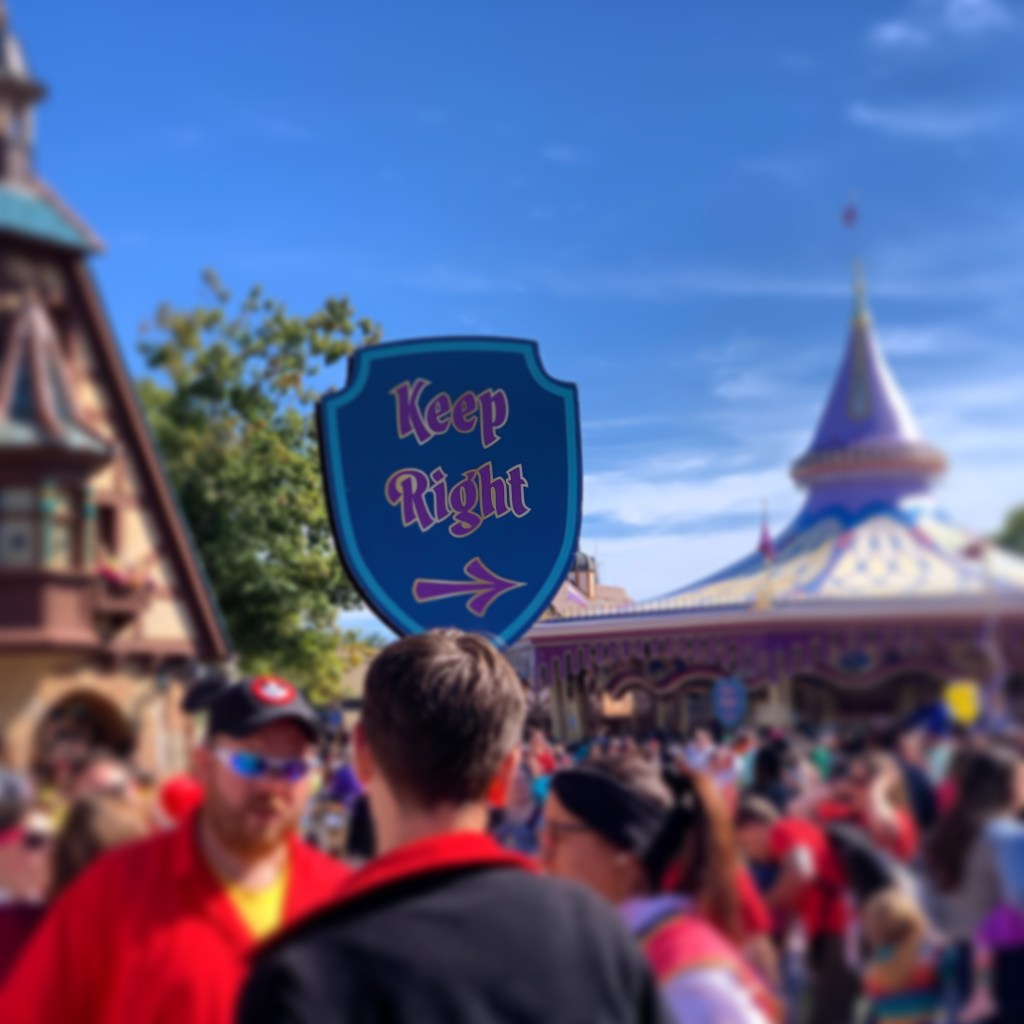
Here’s a counterintuitive tip: walk with confidence and purpose, even if you’re not entirely sure where you’re going. People unconsciously move aside for someone who appears to know their destination. Hesitant, apologetic movement actually creates more congestion and awkward dance-around moments.
Choose wider pathways when possible, even if they add a few extra steps to your journey. The Main Street bypass at Magic Kingdom, for example, is often less crowded than the main thoroughfare.
Reframe Your Perspective
Instead of viewing every potential bump as a disaster waiting to happen, remember that minor collisions are incredibly common at theme parks – and most people are understanding about them. You’re not responsible for everyone else’s spatial awareness, and most guests appreciate someone who’s thoughtful about navigation, even if they don’t express it.
Your size doesn’t make you more dangerous; it makes you more visible and, frankly, more considerate of others’ space.
Create Comfort Zones
Theme parks can be overwhelming for anyone, but the constant hypervigilance required for crowd navigation can be particularly draining. Build regular breaks into your day:
- Find quiet corners and outdoor seating areas for brief respites
- Use mobile ordering to avoid crowded food service lines
- Consider midday breaks at your resort if you’re staying on property
- Take advantage of less crowded areas like the trails at Fort Wilderness or the gardens at EPCOT
The Mental Game
Perhaps the most important shift is moving from feeling solely responsible for crowd navigation to recognizing it as a shared experience. Yes, you might be more aware than the average guest, but that awareness is valuable – both for your safety and others’.
Instead of anxiety about your size, try reframing it as confidence in your ability to navigate complex social spaces thoughtfully. You’re not taking up too much room; you’re using your space consciously and considerately.
Making Magic Happen

Disney World is designed to be magical for guests of all sizes and abilities. Don’t let crowd anxiety rob you of experiences you’ve paid for and looked forward to. With some strategic planning, confident movement, and a reframed perspective, you can focus less on navigation logistics and more on creating those magical moments.
Remember: you belong in these spaces just as much as anyone else. Your thoughtful approach to crowd navigation isn’t a weakness – it’s a strength that makes the parks safer and more enjoyable for everyone.
The magic isn’t just in the attractions and characters; it’s in the confidence to fully enjoy them without constantly worrying about everyone else’s spatial awareness. You’ve got this.
Have your own tips for navigating crowded Disney theme parks? Share them in the comments below – we’re all in this magical journey together.

 Daily Irritant
You must be logged in to post a comment.