
If you had a freeway billboard, what would it say?
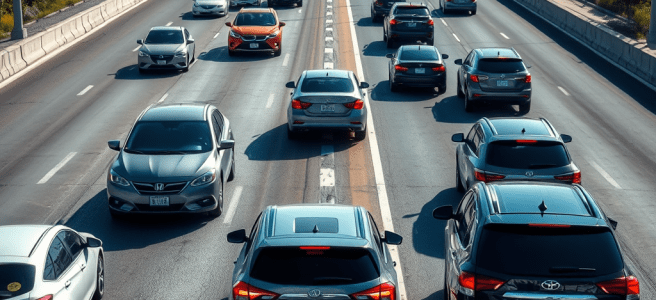
Both lanes are used fully up to the merge point!
- At the point where one lane ends, drivers take turns merging:
- One car from the left lane
- One car from the right lane
- Just like the teeth of a zipper coming together.
When to Use It
✔ Heavy traffic
✔ Stop-and-go or slow-moving conditions
✔ Clearly marked lane closures (“Lane Ends Ahead”)
🚫 Not necessary in light traffic (early merging works fine when there’s plenty of space)
Why It Works
Traffic studies show zipper merging:
- Reduces queue length by up to ~40%
- Prevents one lane from backing up excessively
- Reduces rear-end collisions
- Keeps traffic flowing more evenly
Early merging in heavy traffic causes:
- Long backups in one lane
- Aggressive behavior
- Lane blocking and sudden braking
Driver in the Ending Lane
- Stay in your lane until the merge point.
- Match the speed of traffic.
- Signal early.
- At the merge point, move smoothly into the open lane behind one vehicle.
- Do not stop unless traffic is stopped.
Driver in the Through Lane
- Expect cars to merge at the end.
- Leave one car length of space.
- Maintain a steady speed.
- Allow one vehicle in, then continue.
- Do not block the ending lane.
Blocking is unsafe and often illegal.
Common Myths (and the Truth)
❌ “Using the open lane until the end is cutting in line”
✅ It’s the intended design in heavy traffic.
❌ “Merging early is more polite.”
✅ Early merging actually makes congestion worse when traffic is heavy.
❌ “I should stop them from merging”
✅ Lane blocking increases crash risk and road rage.
Key Rule to Remember
Early merge in light traffic.
Zipper merge in heavy traffic.

 Daily Irritant