I regret not eating it. I saw it too late after I ordered. I talked to the manager at the Hapeville Dwarf House and he said they served 125 to Georgia Tech students the night before. They have a tradition for first-year band members where they have to eat it without utensils. One girl finished it in 50 seconds. She’s my new hero.
I will attempt to make this at home. Chicken, cream of chicken, bacon, cheese, and paprika. It should be a cinch.
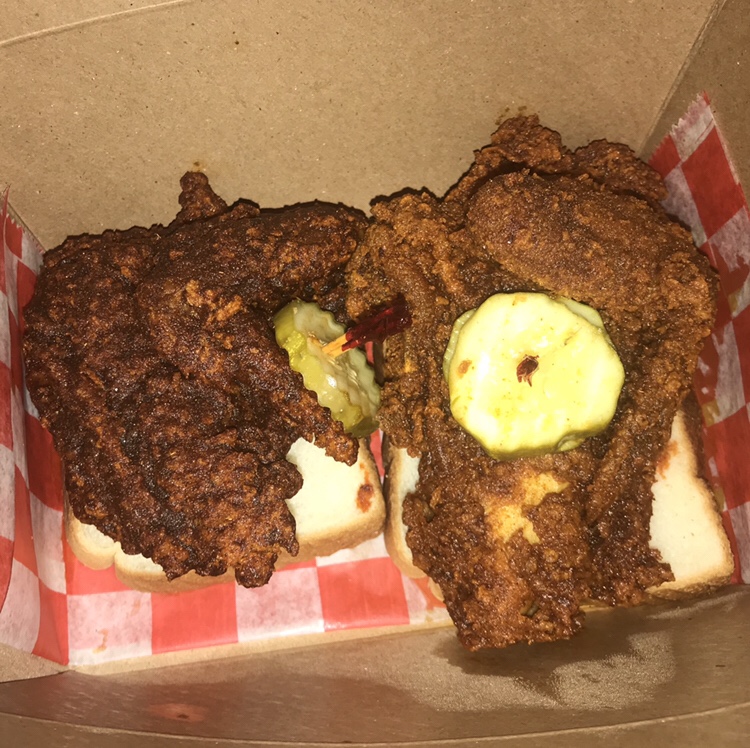
I had several people recommend Hattie B’s so I had to try it. I’ve been a chili head since I was a teenager, so I had to go for the top rung of “Shut the Cluck Up” Hot Chicken. I’ll admit it was very hot. My body had an instant reaction, I started to hiccup and my eyeballs turned red and began to leak capsicum. The piece of bread underneath was disintegrated into a pool of grease and fire juice. There were a few pickle chips as well, but at that point, I couldn’t feel my face so my taste buds were dysfunctional.
The real “wake-up call” came the next day at 6am. I’m so glad I had the foreknowledge to pack some Cottonelle wipes, it literally saved my behind from the exit wounds. Doesn’t matter how much of a heat tolerance your upper orifice can handle, the lower one is never able to compensate.
Tip: Order the Damn Hot and Shut the Cluck Up, eat the Damn Hot First, the second doesn’t seem as bad
A father-son trip full of sunshine, surf, and just enough chaos to keep it interesting.
Some vacations are all about relaxation. Ours was about testing the limits of patience, horsepower, and my ability to keep hold of a water bottle in public. Over the course of a week in San Diego, my son and I enjoyed perfect weather, stunning beaches, and unforgettable food — all while surviving airport drama, rental car roulette, and a finale that involved ghosts on the interstate.
Here’s how it went down…
Part 1: The Epic Journey West My son and I started our adventure with a flight from Charleston to Atlanta, where I decided to become the moving sidewalk entertainment. My water bottle made multiple breakaway runs down the belt, startling everyone within a 20-foot radius. If there’s an Olympic sport for “Airport Object Fumble,” I’d have at least made the finals.
The cross-country flight to San Diego was long, but landing in a time zone three hours behind made it feel like we’d gained a bonus day. Nothing like waking up in South Carolina and still making it to California in time for lunch.
Part 2: The Rental Car Hunger Games As soon as we got off the plane, we saw people casually strolling onto the car rental shuttle. Security promptly yelled at us to get in line — behind 50 other people. I asked, “What about the eight people who just walked on? Sounds like you need to tighten your security.”
Part 3: The Payless Powerless Experience At Payless Car Rental (spoiler alert: don’t), I had booked a “Manager’s Special,” which promised a Chrysler 300 or similar. Instead, we got a Mitsubishi Mirage — a 3-cylinder lawnmower disguised as a car, with a whopping 75 horsepower. I paid the same price.
Clown car
We did agree to pay for a full tank at $4 per gallon (local rate: $4.79). Great deal. Except when we drove away, we noticed full-size cars just sitting in the lot like sad, neglected orphans.
Part 4: The Calm Before the Comedy Storm We checked into our hotel after stopping at Nico’s for an authentic California burrito — a culinary masterpiece that could solve most international conflicts. Then we strolled along Ocean Beach, watching surfers compete like they were auditioning for a soda commercial. We stocked up on snacks for the week. It was bliss.
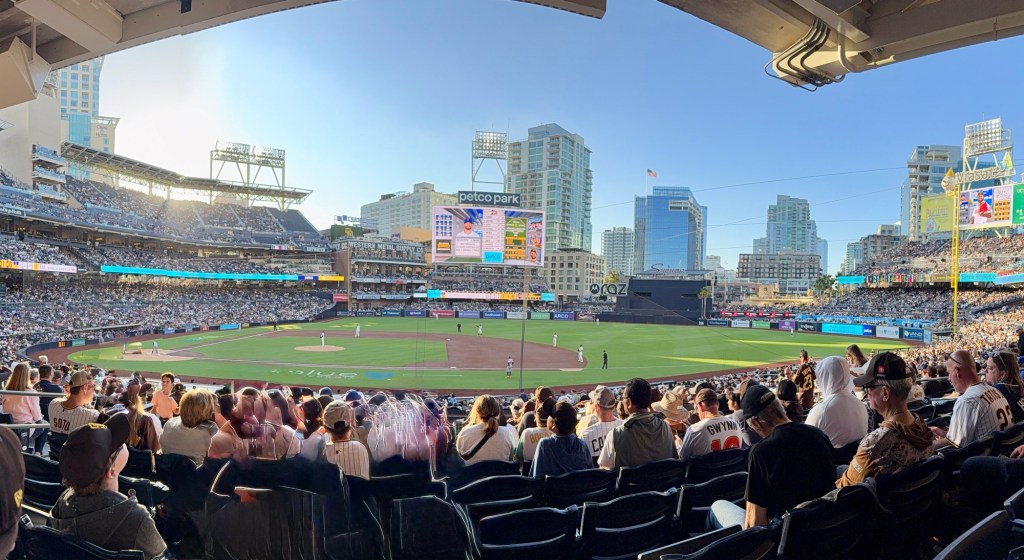
Part 5: Beaches, Baseball, and the Otey Jinx The next day we hit La Jolla Beach. My son skimboarded, I took photos and videos, and the weather was perfect. Then we went to Petco Park to watch the Padres take on the Mets. The Mets were on an eight-game winning streak. I showed up, and they promptly lost — and then went on to lose six more games after that. You’re welcome, Padres fans.
My view
Part 6: Lions, Tigers, and Double-Doubles We followed up with the San Diego Zoo (world-class, by the way) and then my very first In-N-Out Burger experience — a glorious double-double tray. We checked into our flight home, returned to the hotel after watching the sun set into the Pacific Ocean at Carlsbad Beach, and went to bed feeling like travel champions.
Part 7: Tsunami, Traffic, and Total Travel Taxation Departure day started with a cheery news update: a Russian earthquake had triggered a possible tsunami for the West Coast. This delayed our flight just enough for us to miss our connection to Charleston.
Then, while packing the car, my key slipped into the seat and the door closed, locking it inside. The locksmith took 45 minutes to arrive, 30 seconds to open the door, and charged me $165 for the privilege (after quoting me $80).
We still aimed for one last In-N-Out double-double, but got stuck in apocalyptic traffic. That 30-minute delay meant we returned the Mirage late — and got hit with a $15 fee.
Part 8: The Great Delta Debacle At the San Diego airport, I called Delta to get a refund for the final leg to Charleston and to book a rental car for the ATL-to-home drive. They said “No problem, we’ll reimburse you because of the delay.”
Except when it was time to board… Delta had canceled my entire trip. My comfy aisle seat? Gone. I was rebooked into a middle seat for the four-hour flight back to Atlanta.
When we landed in ATL, we had to wait out a fire delay on the airport shuttle before even getting to the rental car place. I asked for the full-size car I’d booked, and they handed me a Nissan Altima. Hey, at least it had more horsepower than the Mirage — I could almost feel the wind in my hair.
We hit the road with an ETA of 4:30 a.m. It was actually a nice ride — my son and I talked about everything under the sun until he fell asleep, which triggered “Super Alert Dad Mode.” I started seeing what I can only describe as interdimensional beings darting across the highway.
Once home, we napped before work, returned the rental car, and then I got an email from Delta: “We will not be reimbursing your rental car, but we have issued you a $70 refund for the canceled flight.” Almost broke even… if you ignore all the math.
Moral of the Story: Don’t let your return trip ruin the good memories you made. Even if it involves tsunamis, Mirage-level horsepower, and paranormal highway creatures.
Travel Tips I Learned the Hard Way
Never trust “Manager’s Special” — It’s code for “We’re giving you a car with the acceleration of a hair dryer.”
Airport water bottles are like toddlers — If you set them down for even a second, they will run away in public and humiliate you.
Don’t argue with rental car shuttle security — They are not here for logic. They are here for dominance.
Earthquakes don’t care about your connecting flight — Nature is the ultimate gate agent.
Locksmith math — $80 on the phone = $165 in person. The $85 is for showing up with a tool.
In-N-Out will test your willpower — The traffic is bad, but the burger is worth questioning your life choices.
Middle seats are where joy goes to die — Especially after you paid for the aisle.
If your kid falls asleep on a late-night drive — Prepare to meet every ghost, shadow person, and cryptid your imagination can create.
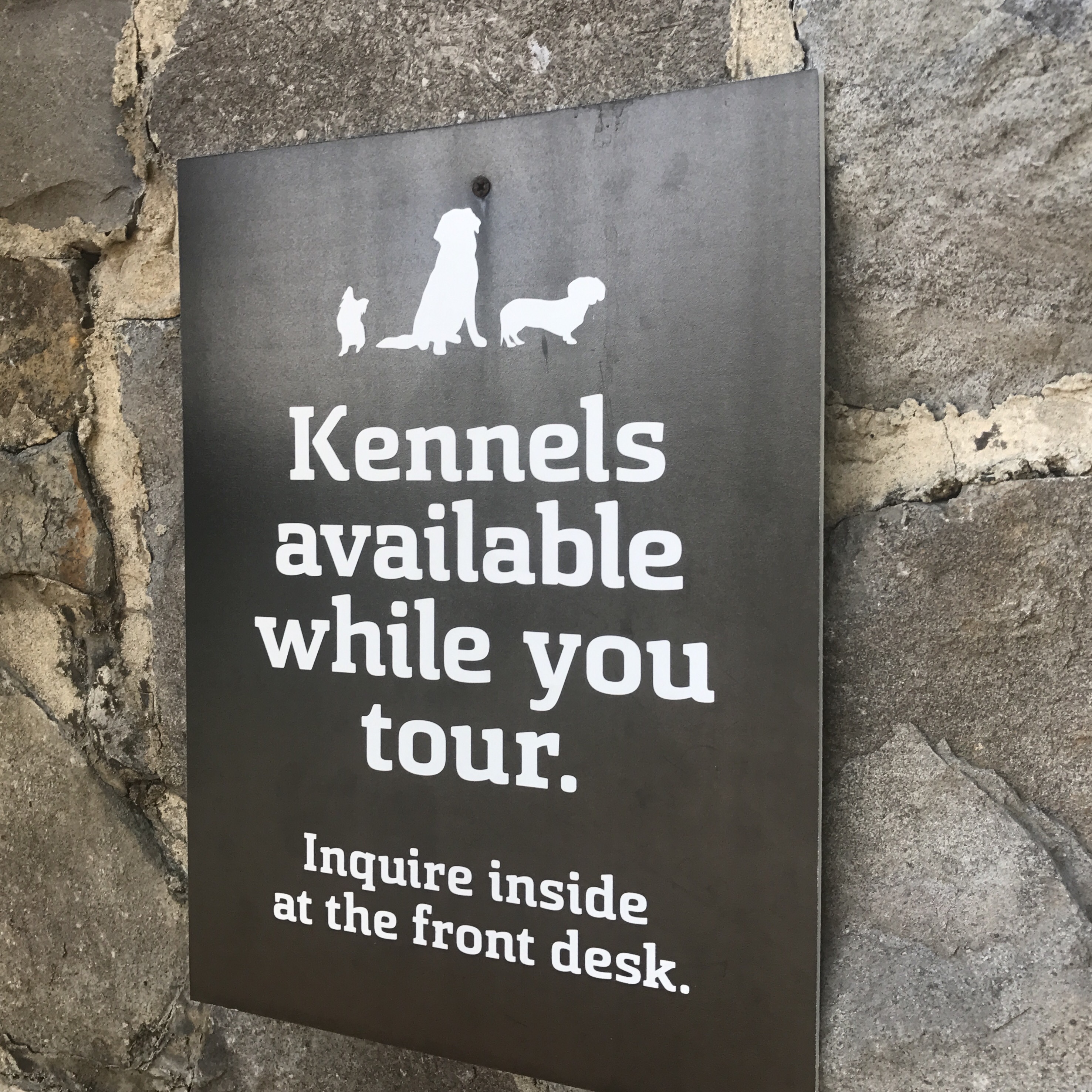
People bring their dogs everywhere. Restaurants, libraries, grocery stores, the doctor, no not the vet. Tourist attractions are now putting up passive-aggressive signs to subtly hint that no one likes your dog. There used to be a time when you’d see a stroller with a cute baby, but now it’s occupied by a dog. People will carry their dogs in a Baby Bjorn just so they don’t have to pay for a kennel.
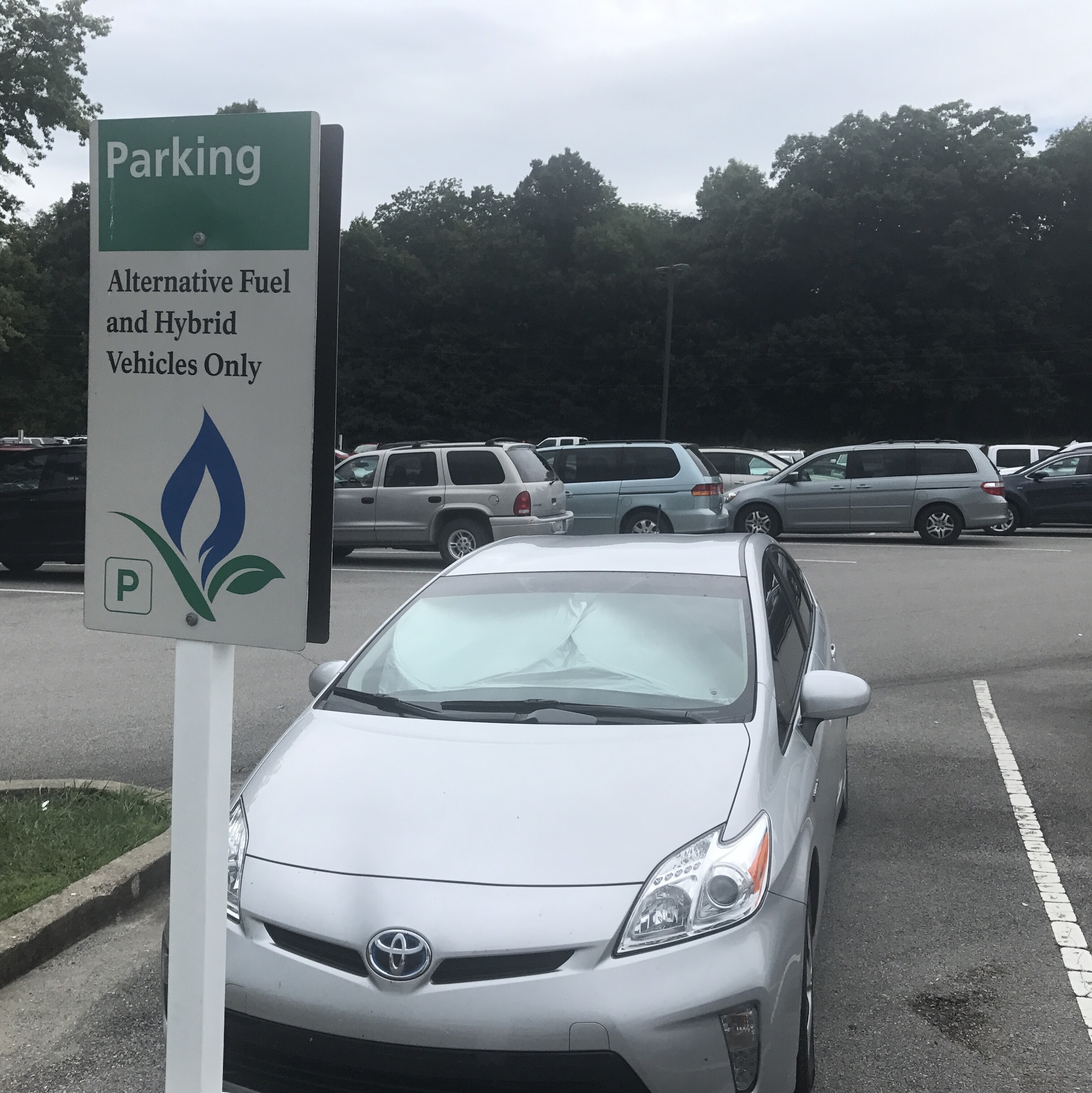
If you really think about it, hybrids and alternative fuel cars should be forced to park as far away as possible. Allowing them to park so close forces the gas guzzlers to burn more fuel looking for a spot thus forcing more carbon dioxide into the atmosphere. Hybrids are already fuel efficient enough, you don’t need to reward them by giving them the same treatment as handicapped parking. I can understand electric cars being allowed to park close so they can plug into their USB chargers or swap out their D batteries.
Can we agree that segregation and privilege are wrong?
On one of our family road trips, we were traveling back from a smaller road trip after visiting Mammoth Cave National Park. We were about 30 minutes away from our hotel in Nashville when we came to a complete stop. We could see there were only about 50 cars ahead of us and emergency workers scrambling to save someone. We waited about 40 minutes. So how do you redeem the time?
Pray for the people involved. This is the easiest thing to do if you are not first on the scene and try to calm and help the people.
Get out and look Get out of your car and see if you can see what happens. Cross your arms and pace, this should get things moving.
Bathroom break Let your kids out to pee on the side of the road. You will never see these people again so it’s OK for a brief period of public urination. The cops are busy anyway.
Complain Turn the event into a self-centered tirade about how much you are being inconvenienced. Say things like, “If they aren’t dead, then they should be in jail for causing such a horrible delay”. You know, terrible things like that.
Repent For all those terrible thoughts you just had about the terrible wreck. But then rationalize that if it’s only a mere fender bender then they should at least perform community service.
Load the bottom rack with larger items, such as plates, pots, and pans, facing the center and the spray arms. Load the top rack with smaller items, such as glasses, cups, and bowls, avoiding overlapping or blocking the water jets. Load the utensil basket with forks and spoons alternating the direction, and knives pointing down for safety. If you have a third rack, use it for long utensils or silverware.
Unload the dishwasher from bottom to top, starting with the utensil basket. This way, you avoid dripping water from the upper rack onto the dry dishes below. Be careful with sharp or fragile items.
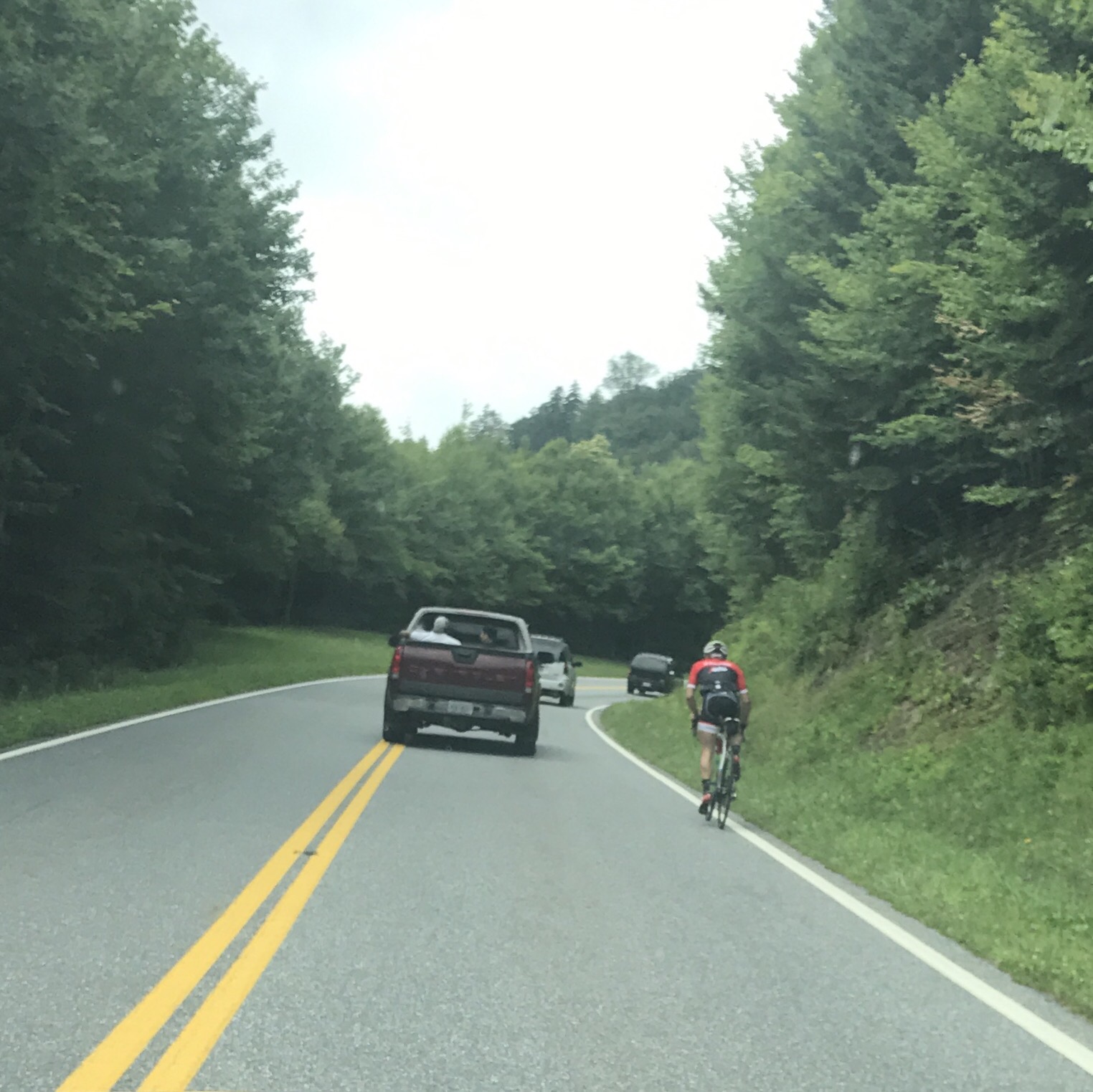
I don’t know who I’m more afraid for: The guy on the bike or the two men putting their faith in that tailgate.
It’s fine if you want to ride your bicycle, but c’mon, across the twists and turns of the Great Smoky Mountain Expressway? You put your faith in people who text and drive around kiss your a$$ turns? You are a true adrenaline junkie if the odds of getting smeared all over the side of a mountain are this high.
There you are enjoying your summer of sunburns, splinters, spider bites and then the back to school circular shows up. The radio DJ won’t keep his trap shut about going back to school. Your parents were so happy to show it to you just to let you know the end of summer fun is nigh.
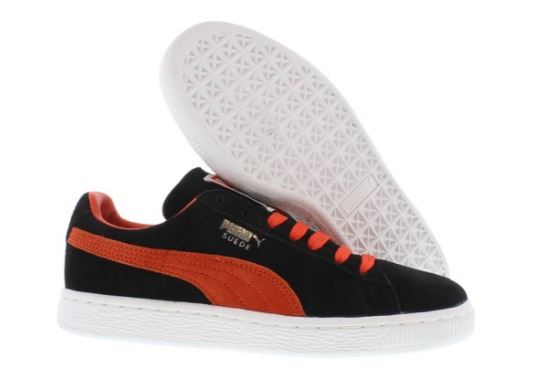
The best part of back to school was getting a brand new trapper keeper to put your doodles in because the teacher was uninteresting. The worst part was showing up with your new clothes and sneakers only to be mocked for having last year’s models of Swede Pumas. How did seventh graders know this? I was happy to have name brands!
Can you believe this used to be $3.00 for a sixer of 16.9oz of Pepsi Zero Original Recipe with all the caffeine and ginseng?
Do you think BOGOs are a good deal? How’s come when you see the same item at Walmart it’s the same price as one of the buy one get one? That’s because BOGO is a scam. Paying full retail price vs what the price should be. It’s not near as worse as by 3 get 2 free that Harris Teeter shills. If you divide it out it’s about the same price as a single item at Walmart or Aldi. Don’t fall for it!









 Daily Irritant
You must be logged in to post a comment.